1. What Happens During Your First Personal Training Session
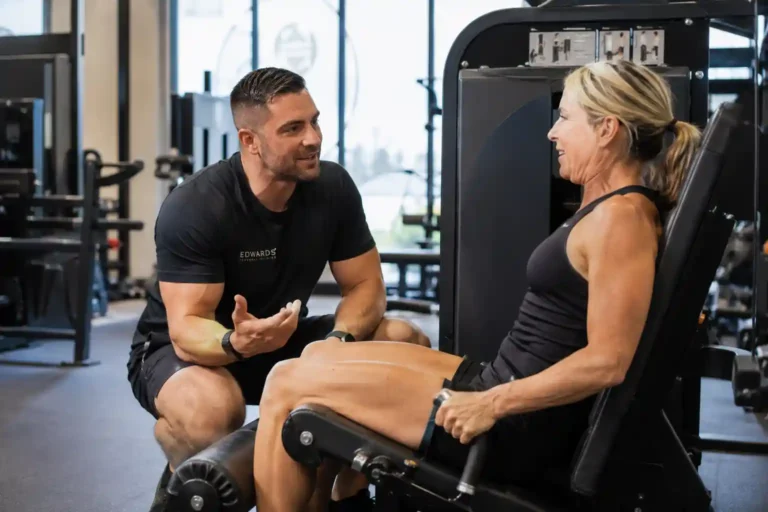
Your trainer will usually begin your first personal training session with a conversation about your goals, lifestyle, and exercise background.
Topics may include:
- Your fitness goals
- Previous workout experience
- Past injuries or physical limitations
- Daily activity level
- Nutrition and recovery habits
This consultation helps your trainer create a realistic and effective roadmap.
Evidence-based fitness organizations such as American College of Sports Medicine support personalized fitness programming for long-term results.
Learn more here:
American College of Sports Medicine
2. Preparing for Your First Personal Training Session
Most trainers will perform a baseline fitness assessment during your first personal training session.
This may include:
- Posture evaluation
- Mobility screening
- Balance testing
- Core stability checks
- Basic strength measurements
- Cardiovascular endurance assessment
These assessments help identify movement imbalances and establish a safe starting point.
3. Body Measurements and Progress Tracking
Depending on your goals, your trainer may track:
- Body weight
- Body fat percentage
- Circumference measurements
- Progress photos
- Performance benchmarks
Tracking data creates measurable progress and helps adjust your training plan over time.
4. Learning Proper Exercise Technique
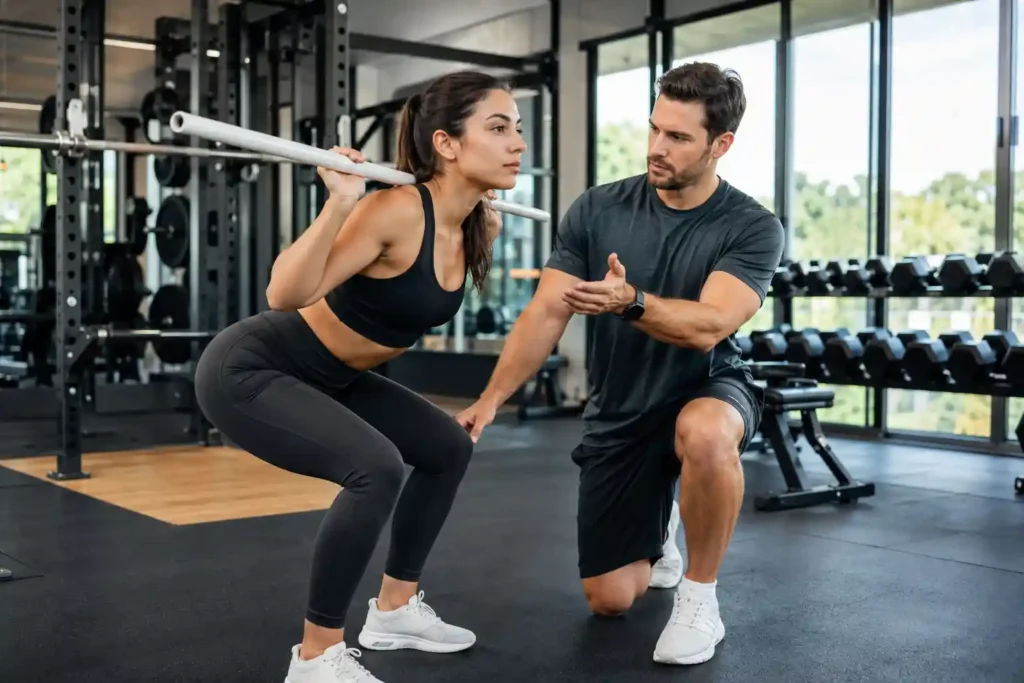
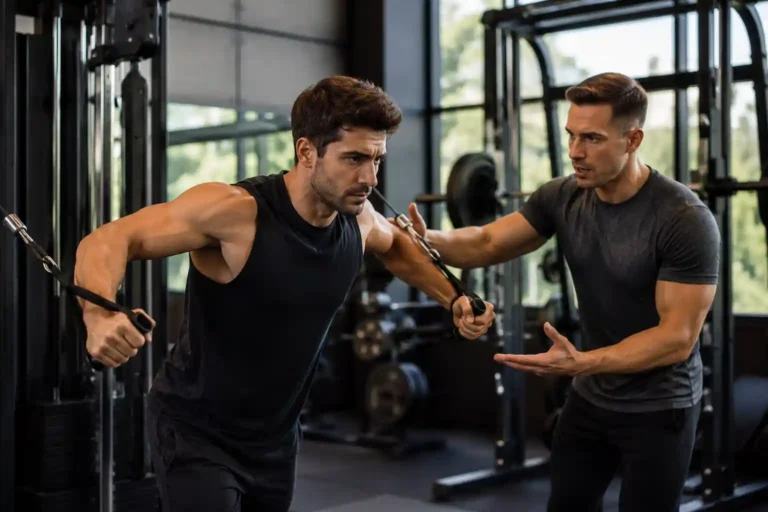
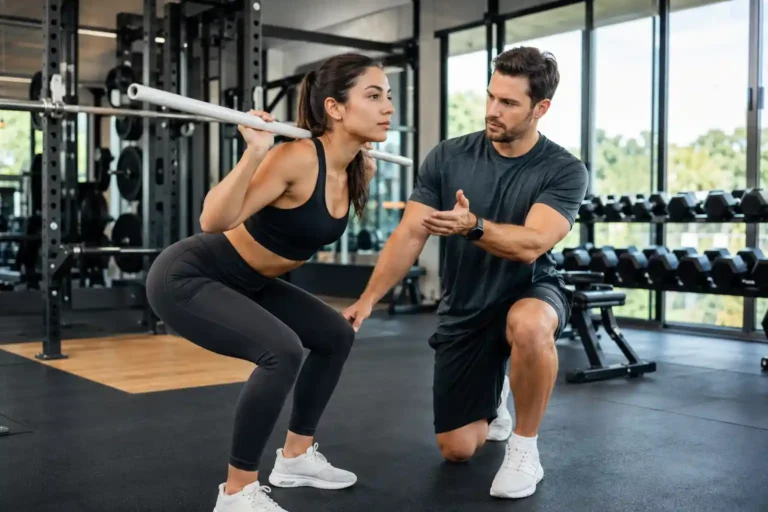
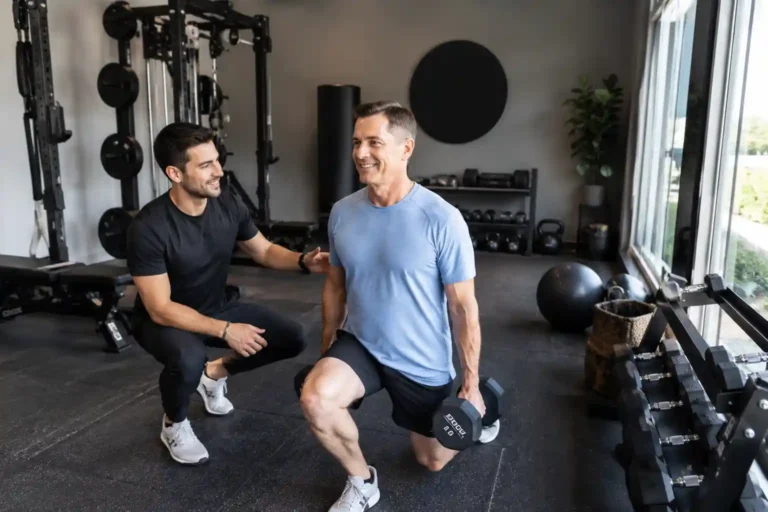
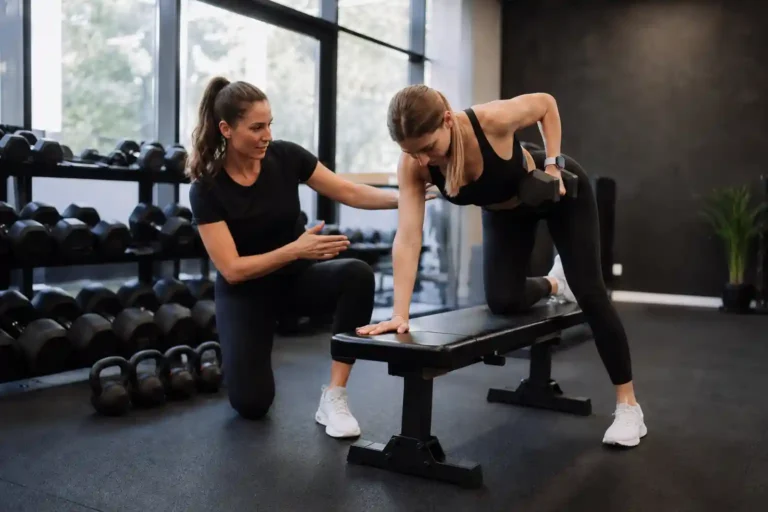
A major part of your first personal training session involves learning movement fundamentals.
Your trainer may teach exercises such as:
- Squats
- Lunges
- Push-ups
- Rows
- Core exercises
Technique matters because proper movement reduces injury risk and improves results.
Organizations like National Academy of Sports Medicine emphasize movement quality as the foundation of exercise success.
Learn more here:
NASM
5. How to Get the Most from Your Training Experience
After the assessment, your trainer may guide you through a beginner-friendly workout tailored to your abilities.
This workout often includes:
- Dynamic warm-up
- Strength exercises
- Functional movement drills
- Light conditioning
- Cool-down stretches
The goal is not to exhaust you—it’s to establish a safe and effective training baseline.
6. Recovery and Next Steps
At the end of your first personal training session, your trainer may discuss:
- Recovery strategies
- Muscle soreness expectations
- Hydration tips
- Training frequency recommendations
- Nutrition support
Trusted health organizations such as Mayo Clinic also highlight recovery and consistency as key fitness success factors.
Learn more here:
Mayo Clinic Fitness Guide
For more personalized coaching and fitness programs, visit:
Winter Park Personal Training
Final Thoughts
Your first personal training session is not about being perfect—it’s about creating a starting point built around your goals, abilities, and long-term success. A great trainer helps you build confidence, move safely, and develop habits that produce lasting results.